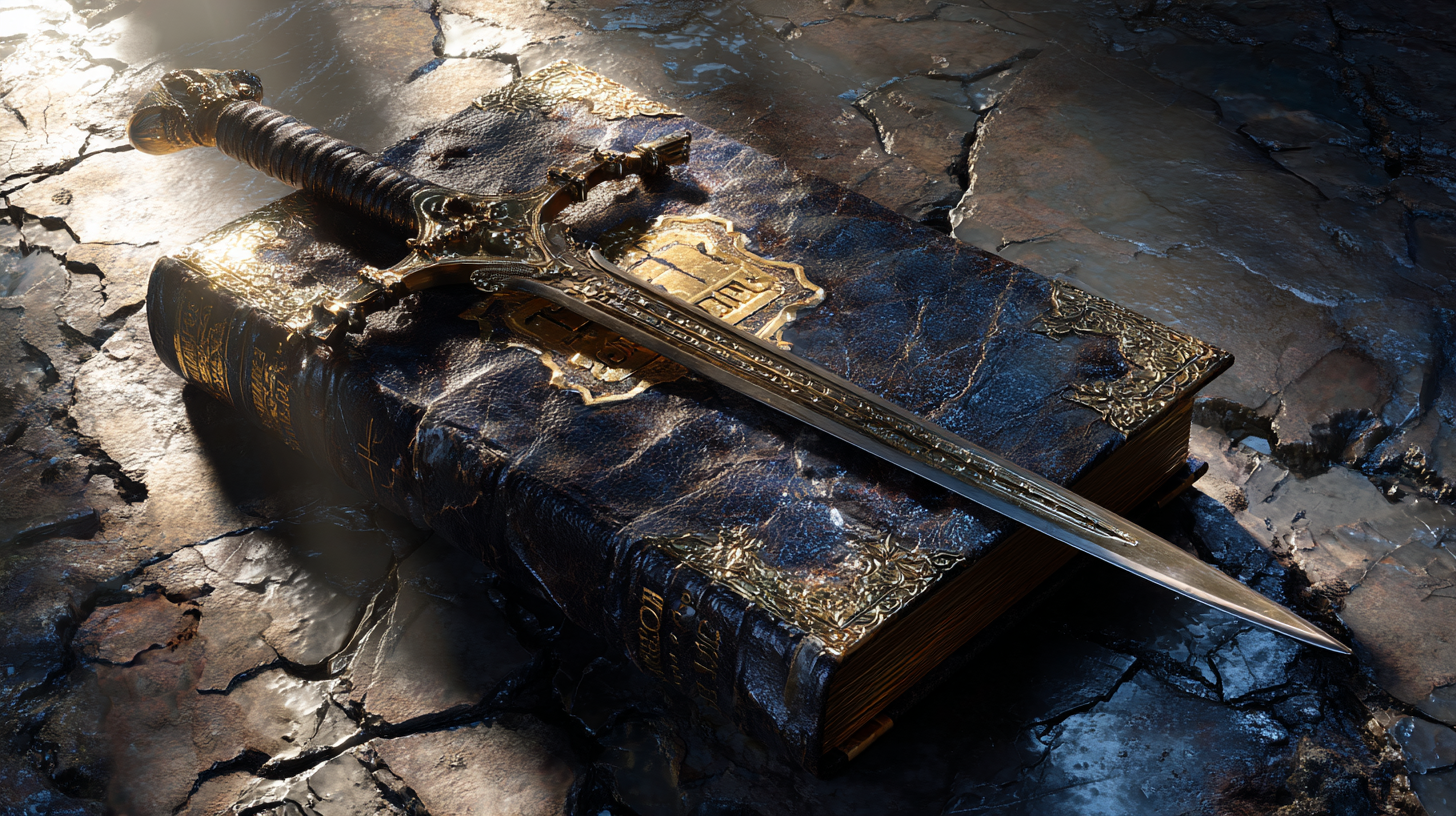
War Journal Section 6 – The Armor of God

THE WAR JOURNAL

Section Six: The Armor of God

By Ed Mabrie

As I got to know my platoon mates during basic training at Fort Jackson, South Carolina, I came to understand that they fell into three broad categories. The first were the ones I mentioned earlier — the genuinely gung-ho fighters who loved nothing more than the idea of marching into a firefight. Those were the ones I stayed away from. The second were people like me, using the Army as a means to an end — mostly the GI Bill, college, and a quick return to civilian life. And then there was a third group: those who genuinely wanted a career in the armed forces and had been preparing for it since long before they set foot in basic training.

One of those was Private Granger. He was a good old boy from Alabama in every sense of the word — a Southern gentleman brimming with hospitality — and he became one of my closer friends during that time. Granger’s goal was to complete his service, earn his officer’s commission, study economics at Auburn University on the GI Bill, and build a career teaching military economics. Because he had known that path since high school, he had entered basic training already knowing a great deal about the rituals, the expectations, and the gear. He had come up through JROTC, where they wore fatigues once a week and learned military curriculum long before they were in any danger of actually being shot at.

For me, Granger was invaluable. The drill sergeants were not exactly comprehensive or patient teachers. Granger always was. He showed me the proper way to wear my fatigues, shine my boots, put on my gear, break down and clean my rifle. But even on the days when he could not be right beside me, I had developed a simple habit that never failed me: I would just look over at him and see what he was doing. How he wore it, how he carried it, how he assembled himself. If I could emulate Granger, I knew I was on the right track.

I think about Private Granger every time I sit with the passage in Ephesians 6 about the armor of God. Because the same principle is at work. When Paul described that armor, he was not fabricating a metaphor out of thin air — he was looking at a model right in front of him and asking what it meant for the spiritual realm. Just as I looked to Granger, Paul looked to his Roman guard. And just as Granger was modeling something worth imitating, so was that guard — though neither of them knew it.

Paul’s Classroom Was a Chain

Here is the situation Paul was in when he wrote the letter to the Ephesians. He was under house arrest in Rome, somewhere around AD 60 to 62. Acts 28:16 records that he was allowed to live by himself — but whenever he left, he was chained to a Roman soldier. And not just any soldier. His guards were members of the Praetorian Guard, the elite unit assigned to protect the emperor himself.

The chain connecting them was called a hellusus — roughly eighteen inches of metal linking his wrist to the guard’s wrist. He could go nowhere without a fully armed, fully equipped Roman soldier attached to him. The guards rotated in shifts over the course of two years. That is thousands of individual encounters with the most disciplined military force in the ancient world, at arm’s length, every day, for years. Paul had the most comprehensive front-row seat to Roman military equipment imaginable.

So when he sat down to write the final chapter of his letter to the Ephesians — a city saturated in occult practice, where new believers had publicly burned their sorcery scrolls in a bonfire worth fifty thousand pieces of silver — he reached for the most concrete image available to him. The gear strapped to the man beside him.

But here is where it gets remarkable. And I have to give full credit to the ministry Deep Made Simple for illuminating this for me, because it genuinely changed the weight of this entire passage.

Paul was not the first one to write about a breastplate of righteousness and a helmet of salvation. He borrowed those images from somewhere. Seven hundred years earlier, the prophet Isaiah described a scene in which God looked at the world and found no justice, no one righteous enough to intervene, no one willing to step forward. So God did what He had to do. He suited up Himself.

He saw that there was no man, and wondered that there was no intercessor; therefore His own arm brought salvation for Him; and His own righteousness, it sustained Him. For He put on righteousness as a breastplate, and a helmet of salvation on His head. — Isaiah 59:16-17 (NKJV)

Breastplate of righteousness. Helmet of salvation. Those are not Paul’s words. They are Isaiah’s. And in Isaiah, they do not belong to a soldier or a believer. They belong to God Himself, who put them on when no one else could.

The armor of God is not called that because God gives it to you. It is called that because God wore it first. Then He handed it to you.

That changes the weight of every piece. When you put on the armor, you are not strapping on generic spiritual gear. You are wearing the equipment of the God who already fought — and already won — in it. Keep that in mind as we go through each piece. This is not your armor. You are borrowing His.

Standing Armor: What You Put On Before the Fight

Paul’s description of the armor divides naturally into two groups. The first three pieces are what I would call standing armor — they go on before the battle begins. They are your baseline. They are described with a verb form suggesting a completed action: you have already put them on. If you are a believer, these are not things you are still earning. They are things that have already been provided and are waiting to be worn.

1. The Belt of Truth

“Stand therefore, having girded your waist with truth.” — Ephesians 6:14

The Roman soldier’s belt — the cingulum — was not a decorative strap. It was a thick, sturdy leather band that did three critical things: it held the tunic tight against the body so it would not flap loose in a fight, it carried the sword in its scabbard, and it secured the breastplate in place. Without the belt, nothing else had anything to anchor to. It was the foundation piece. Everything depended on it.

The belt also served as a soldier’s badge of standing. Roman soldiers wore it both on and off duty. If a commanding officer wanted to publicly humiliate a soldier, he stripped the belt. Losing your belt meant losing your identity as a soldier.

Paul assigns truth to this piece — and when you understand what the enemy’s primary weapon is, the reason becomes immediately clear. John 8:44 records Jesus’s own description of the adversary: ‘He is a liar and the father of it.’ Lying is not an occasional tactic the enemy employs. It is his native language. He lies about God’s character. He lies about your identity. He lies about your future. He lies about what happened and what it means.

Truth is the counter. Not truth as an abstract philosophy, but truth as an anchor — the right WHAT established, with the right WHY behind it and the right HOW through which it operates. Without truth holding everything in place, you cannot secure the breastplate. You cannot sheathe the sword. You cannot even stand upright. And as John established in the Combat Manual, deception is never a wrong WHAT — it is always a right WHAT with a wrong or missing WHY and HOW. The belt of truth is the piece that insists on all three.

CONNECTION TO SECTION 5 — COUNTERINTELLIGENCE The belt of truth is the physical armor equivalent of the WHAT/HOW/WHY test. The enemy’s methodia — his methodical strategy — is built entirely on deception. He plants doubt about God’s word, then contradicts it, then reframes God’s motive. That three-step sequence falls apart the moment you insist on truth in all three dimensions: the right WHAT, the right WHY, and the right HOW. Without the belt, everything else slides off.

2. The Breastplate of Righteousness

“Having put on the breastplate of righteousness.” — Ephesians 6:14

The Roman thorax — the breastplate — was a rigid plate covering the torso from neck to waist, both front and back. It protected the heart and every vital organ. In Hebrew thought, the heart was not the seat of emotion. It was the seat of the will and the mind. The bowels were where emotions were located. So the breastplate covered both the seat of decision and the seat of feeling. It protected the interior life completely.

Isaiah 59:17 gives us this exact image: God put on righteousness as a breastplate. And now Paul says you should wear the same one. The attack this piece was forged to fight is accusation. Revelation 12:10 names the enemy directly: the accuser of our brethren, who accused them before our God day and night. His tactic is relentless: he will remind you of every failure, every compromise, every moment you fell short. He will whisper that you have gone too far, that God is done with you, that your history disqualifies you from grace. That voice goes straight for the chest. And it is devastating — if you are trying to defend yourself with your own righteousness.

But notice: the breastplate is not called the breastplate of your righteousness. It is the breastplate of righteousness — specifically, the righteousness of God.  As you learned from Reading the book Modeling God, God is ALWAYS and COMPLETELY right and just.  Wearing the breastplate is like wearing god’s IDENTITY over your heart.  Paul describes it further in 2 Corinthians 5:21: ‘He made Him who knew no sin to be sin for us, that we might become the righteousness of God in Him.’ The breastplate is not a record of your performance. It is a declaration of your position. The accuser has no case against someone standing in Christ’s record.

3. The Shoes of the Gospel of Peace

“Having shod your feet with the preparation of the gospel of peace.” — Ephesians 6:15

Roman soldiers wore caligae — heavy leather sandals with iron hobnails driven into the soles specifically for traction. These were not sandals for walking to the market. They were boots engineered for holding your ground on uneven, rain-soaked, blood-slicked terrain. A soldier who lost his footing was finished, regardless of every other piece he was wearing.

The Greek word translated as preparation is hetoimasia, which carries the sense of readiness — a firm foundation already in place. In the Septuagint, the same word family describes the foundation of God’s throne in Psalm 89:14. These are not just boots. They are a symbol of standing on something permanent, something that does not shift under pressure.

And there is a paradox worth sitting with: this is armor for war, and it is called the gospel of peace. The two words seem in conflict. They are not. The peace in question is not the absence of conflict — it is peace with God, a relationship settled permanently at the cross through Romans 5:1. That peace is the ground you stand on while the battle rages around you. The enemy’s move here is to make you feel the ground shifting, to convince you that your standing with God is precarious and conditional. The shoes answer: your footing is not based on your performance today. It is based on what was decided two thousand years ago, and it has not been renegotiated since.

Isaiah 52:7 connects directly: ‘How beautiful upon the mountains are the feet of him who brings good news, who publishes peace.’ Ephesians 6 and Isaiah 52 are among the only passages in all of Scripture where the words feet, good news, and peace appear together in the same context. Paul knew exactly what he was echoing.

Active Armor: What You Pick Up When the Attack Is Underway

The first three pieces — the belt, the breastplate, the shoes — are your standing armor. They go on before the fight begins. They are your baseline posture. What comes next is different. Paul shifts to a different verb form beginning in verse 16: take this up now, as in actively reach for it. These are the pieces you grab when you see the enemy approaching. They are reactive equipment for active combat.

4. The Shield of Faith

“Above all, taking the shield of faith with which you will be able to quench all the fiery darts of the wicked one.” — Ephesians 6:16

The Greek word for shield here is thureos, not the small ceremonial round shield. Thureos comes from thura, meaning door — because this shield was shaped like one. The Romans called it a scutum. It stood roughly four feet tall and two and a half feet wide, curved, layered from wood glued together, covered in canvas and leather, edged with metal. Fully crouched behind it, a soldier was almost entirely unexposed. The weight was between eighteen and twenty-two pounds.

One detail about the scutum mattered enormously in battle: the leather covering required regular maintenance. If it dried out and cracked, the shield lost its ability to absorb impact and resist fire. A neglected shield became a liability. It did not take care of itself.

Paul says the shield quenches fiery darts. In ancient warfare, archers would dip arrows in pitch, ignite them, and launch them in coordinated volleys at the beginning of an assault. These arrows were not just meant to pierce — they were designed to set the soldier on fire from the outside in. And they came not one at a time but in waves.

The enemy’s version of this is the sudden burning thought. Doubt that flares without warning. Fear that ignites in the middle of the night. Lust that strikes when your guard is down. Rage that catches fire before you even know what happened. These are not random. They are volleys — coordinated, timed, designed to set specific things burning inside you.

Faith does not dodge the arrows. It absorbs the hit without catching fire. But faith that is not exercised, not fed, not tested in the small moments becomes brittle — and brittle faith cracks under pressure the same way dried leather does. This is why John’s Combat Manual content on thought processes matters so directly here: a believer habituated to 160 or 80 is carrying a cracked shield into a firefight. The shield only functions well when it is maintained, and it is maintained through daily use.

There is one more detail about the scutum that Paul would have observed from his chained position: in formation, Roman soldiers could interlock their shields to create the testudo — the tortoise formation. Shields overlapping, covering every angle, no gaps, no exposure. It only worked when soldiers stood close together. A single shield is powerful. Interlocked shields are nearly invincible. Faith was never designed to be wielded in isolation. It functions best in community.

5. The Helmet of Salvation

“Take the helmet of salvation.” — Ephesians 6:17

The Roman galea was iron or bronze with cheek guards, a brow ridge, and a flared neck guard. It protected the head — the seat of thought, perception, and decision-making. And once again, Isaiah 59:17 is the origin: God put a helmet of salvation on His own head before Paul ever described placing it on ours.

The attack this piece is designed to fight is despair. Not a single dramatic assault — the enemy’s long game. A slow, patient erosion of hope. The whisper that says nothing will ever change. That you are beyond repair. That the story has already been written and it ends badly for you. That is the specific angle the helmet guards against.

Paul clarifies the helmet’s function in 1 Thessalonians 5:8, where he calls it the hope of salvation as a helmet. Notice the tense. Salvation is not only a past event. It covers your past — you have been justified. It covers your present — you are being sanctified. And it covers your future — you will be glorified. The helmet is forward-looking. It protects the part of your mind that thinks about how the story ends. When the helmet is on, the enemy cannot convince you that the last chapter belongs to him.

6. The Sword of the Spirit

“The sword of the Spirit, which is the word of God.” — Ephesians 6:17

Every other piece on this list defends. This one strikes back. And Paul’s word choice is precise. The Greek word for sword here is machaira — not the romphaia, the large sweeping cavalry broadsword. The machaira was the short Roman sword, roughly eighteen to twenty-four inches long, designed specifically for close-quarters combat. It was a thrusting weapon. Precise. Deliberate. You did not swing it wildly hoping to connect. You drove it forward at exactly the right angle against exactly the right target.

And notice what Paul calls it: the word of God. But the Greek word he uses for word is rhema — not logos. Logos refers to the comprehensive, overarching word of God in its totality. Rhema refers to a specific spoken word, a particular utterance applied to a particular moment. The sword of the Spirit is not the Bible sitting closed on your shelf. It is the right verse, drawn at the right moment, against the right lie.

Jesus modeled this in the wilderness with a precision that is easy to miss. Three temptations. Three specific, tailored attacks from the enemy. Three responses from Jesus, each one identical in form: ‘It is written.’ He did not lecture. He did not debate. He did not launch into an extended theological argument. He thrust. He met each specific lie with a specific truth, chosen precisely for the attack being made. That is how the machaira works.

And it requires preparation. You cannot draw from what you do not carry. You do not learn to swim in the middle of a flood, and you do not learn to wield the sword in the middle of combat. Jesus did not improvise in the wilderness. He drew from what He already knew. The sword only works under pressure if it is familiar before the pressure arrives.  The purpose of the Jehovah Story Bible Study which is a part of this course is to help you become a expert in the Biblical will of God, so that you know precisely where to strike back at any attack on your place in Jehovah’s will!

A NOTE ON TRUTH AND THE SWORD The sword of the Spirit connects directly to John’s teaching on truth as a right WHAT with a right WHY and a right HOW. A verse pulled out of context — a right WHAT with a wrong HOW or WHY — is not the machaira. That is what the enemy himself used in the second temptation of Jesus, quoting Psalm 91 accurately while stripping it of its meaning. The sword of the Spirit is scripture in its full conjunctive form: the what, the why, and the how all present and correctly applied.

Prayer: The Atmosphere in Which the Armor Operates

Paul lists six pieces of armor, and then he adds something that does not quite fit the metaphor — and he does so deliberately.

Praying always with all prayer and supplication in the Spirit, being watchful to this end with all perseverance and supplication for all the saints. — Ephesians 6:18 (NKJV)

Prayer is not a seventh piece of equipment. It is the atmosphere in which all six pieces function. It is the oxygen the soldier breathes inside the armor. You can have every piece strapped on and polished to a shine — and if you are disconnected from the One who forged it, the suit is empty. Prayer keeps the soldier connected to the Commander. It keeps the fight aligned with the strategy of heaven rather than the panic of the moment.

This is also where what I have been calling council meetings becomes the deepest application of this passage. Prayer in the sense of Ephesians 6:18 — praying always, in the Spirit, watchful, persevering — is not reciting requests into the air and hoping someone receives them. It is evoking God’s JUSTICE (the other half of His very identity).  It is what allows Jehovah’s full power to react to the enemy on your behalf!  As my old mentor Chuck Missler would say, “prayer is your long range heavy artillery in your battles” (we will talk a LOT more about prayer in Phase 2!)

Paul closes this passage in a way that is easy to read past. After describing all the armor, after calling for sustained prayer, he does not ask for protection. He asks for boldness.

And for me, that utterance may be given to me, that I may open my mouth boldly to make known the mystery of the gospel, for which I am an ambassador in chains; that in it I may speak boldly, as I ought to speak. — Ephesians 6:19-20 (NKJV)

An ambassador in chains. That is a remarkable phrase. An ambassador represents a king in foreign territory — with all the authority of the king behind the message, regardless of the local hostility to it. Paul is under arrest, chained to a soldier, writing from the middle of a capital city that would eventually execute him. And his prayer request is not for the situation to change. It is for the courage to keep going inside it. That is the posture the armor is designed to sustain.

The War Was Already Won Before You Put the Armor On

Step back now and look at the whole picture. In Isaiah 59, God scanned the earth looking for someone righteous enough to fight on behalf of justice. He found no one. So He put on His own armor and fought the battle Himself. Centuries later, that battle was completed at the cross — and Paul’s description of what that completion looked like is worth reading very carefully:

Having disarmed principalities and powers, He made a public spectacle of them, triumphing over them in it. — Colossians 2:15 (NKJV)

The language here is military and it is specific. A Roman general who won a decisive victory would parade his captured enemies through the streets in a public procession — a triumph. The defeated were stripped of their weapons and marched in humiliation before the entire city. Paul says this is what Christ did to the spiritual powers at the cross. He disarmed them. He paraded them. He won.

And Jesus Himself described this in Luke 11:22 using the word panoplia — the same Greek root word for the full armor. ‘When a stronger man than he comes upon him and overcomes him, he takes from him all his armor in which he trusted, and divides his spoils.’ Jesus is the stronger man. He already stripped the enemy’s armor. The battle you are in is not a battle to win the war. The war has already been decided. You are fighting to hold ground that Christ already took.

If you think you are fighting to win, every setback feels like the war is slipping away. If you know the war is already won, setbacks become contested ground — ground already claimed by a victor who is not worried about the outcome.

That distinction reframes every piece of the armor.

The belt of truth is not your attempt to figure out what is real. It is the reality God has already established — and your job is to strap yourself to it.

The breastplate is not your righteousness on a good day. It is Christ’s righteousness permanently credited to your account. It is part of God’s nature that you wear. The accuser’s charges have already been dismissed.

The shoes are not confidence you manufacture. They are a relationship that was settled at the cross and has not been renegotiated since.

The shield is not willpower. It is trust in the One who has already proven Himself trustworthy. You are not producing faith from nothing — you are acting on evidence that already exists.

The helmet is not positive thinking. It is the settled certainty that the God who justified you will also glorify you. The enemy cannot rewrite your last chapter because he did not author the story.

And the sword is not your cleverness in an argument. It is God’s own word, spoken through a human voice, at the exact moment the enemy thought he had the upper hand.

The Full Armor — A Reference Summary

PIECETHE ROMAN ORIGINALWHAT ATTACK IT FIGHTSWHY IT WORKS
Belt of TruthCingulum — foundation piece holding all other armor in placeDeception — the enemy’s native language; lies about God, identity, futureTruth anchors everything else. Without it, no other piece holds.
Breastplate of RighteousnessThorax — covered the heart, will, and vital organsAccusation — the relentless reminder of your failures and disqualificationsChrist’s righteousness, credited to you. God’s very nature. Not your performance — your position.
Shoes of the Gospel of PeaceCaligae — iron-hobnailed boots for holding ground on bloody terrainInstability — making you feel the ground beneath you is always shiftingPeace with God, settled at the cross. Your standing is not negotiable.
Shield of FaithScutum — door-sized body shield, 18-22 lbs, curved to absorb fireFiery darts — volleys of sudden doubt, fear, lust, despair designed to igniteFaith that absorbs the hit without catching fire. Maintained and exercised.
Helmet of SalvationGalea — iron or bronze with cheek guards protecting the seat of thoughtDespair — the slow erosion of hope; ‘nothing will ever change, it ends badly’Salvation that is past (justified), present (sanctified), and future (glorified).
Sword of the SpiritMachaira — short thrusting blade, 18-24 inches. Precise. Close quarters.Whatever specific lie the enemy is deploying in this specific momentThe right verse, spoken at the right time, against the right lie. Rhema — specific.
PrayerNot a piece of armor — the atmosphere in which all armor functionsThe false idea that you are alone in this battle against enemies more powerful than youGod acting on your behalf through His justice which is part of His holy nature.

A Final Word: The Armor Is Already There

If you have been walking through life without the armor — taking hits without a breastplate, stumbling without boots, absorbing fire without a shield — it is not because God failed to provide it. It is because it is still folded in the corner where He left it. He will not force it on you. But every piece has been made available. Every piece was tested by the God who wore it first. Every piece was proven by the Christ who won the decisive engagement in it. And all of it is waiting for the believer who is ready to stop fighting in their own strength and start standing in His.

The belt is there. The breastplate is there. The shoes, the shield, the helmet, the sword — they are all there. And the God who forged them does not manufacture gear that fails.

Paul called himself an ambassador in chains. Chains do not cancel the appointment. They just mean the territory is hostile. A hostile territory is exactly the place where armor is designed to function.

What Comes Next: Switching from Defense to Offense

This section closes Phase 1 of the War Journal.

Over the past three months, the entire focus of the War Journal has been defensive: understanding who you are in Christ, identifying the legal structure of the spiritual realm, learning the enemy’s tactics and limitations, building your council meeting practice, training your counterintelligence to distinguish the voice of God from its counterfeits, and now — as Phase 1’s final lesson — putting on the full armor of God so you have a standing defensive posture that does not depend on how the day is going.

That foundation is now in place.

Starting next month, Phase 2 begins — and the orientation shifts. Where Phase 1 was about knowing yourself and building your defense, Phase 2 is about knowing your enemy and taking the offensive. You will learn in specific detail who and what is actually arrayed against you, how they operate, what their legal constraints are, and — critically — how you drive them out rather than simply withstand them.

In military terms: you have completed basic training and been issued your equipment. It is time to deploy.

The armor you just put on is not for standing still. It is for advancing.

Phase 1 is complete. Phase 2 begins next month.

Defense built. Armor on. Now we advance.